IDC: from a growth thesis to a product buyers use.
IDC built its reputation on technology research and analyst insight. When the company set out to turn that expertise into digital products, DesignMap designed the first one: a buying platform for mid-market IT teams.
IDC had a strategy for growth. It did not yet have a product.
Bain had identified where IDC could grow: serving mid-market technology buyers, a segment the company's analyst business had never directly reached. What existed was a set of directional use cases. In early 2024, IDC engaged DesignMap to turn that direction into a product the market would actually choose.
The strategy named the market. Research named the problems.
DesignMap started with the buyers themselves: interviews with mid-market technology executives, subject matter experts, and the stakeholders shaping the product, Bain included. The team mapped the buying journey end to end and broke the original use cases down against what buyers described. The priorities shifted. The use cases that mattered most were not the ones anyone had assumed at the start, and the research gave the team the evidence to reorder them with confidence.
Concepts earned their place by surviving contact with real buyers.
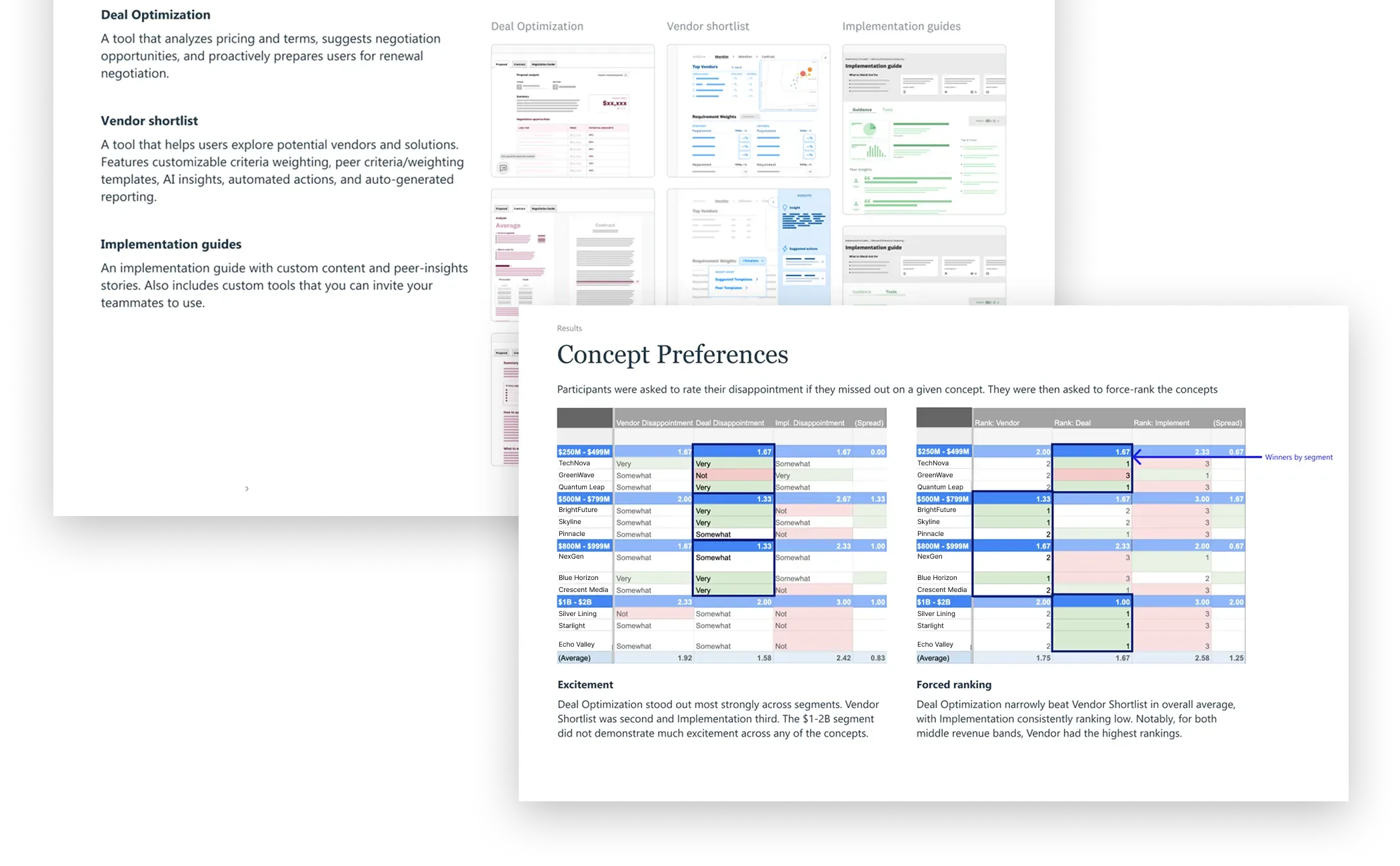
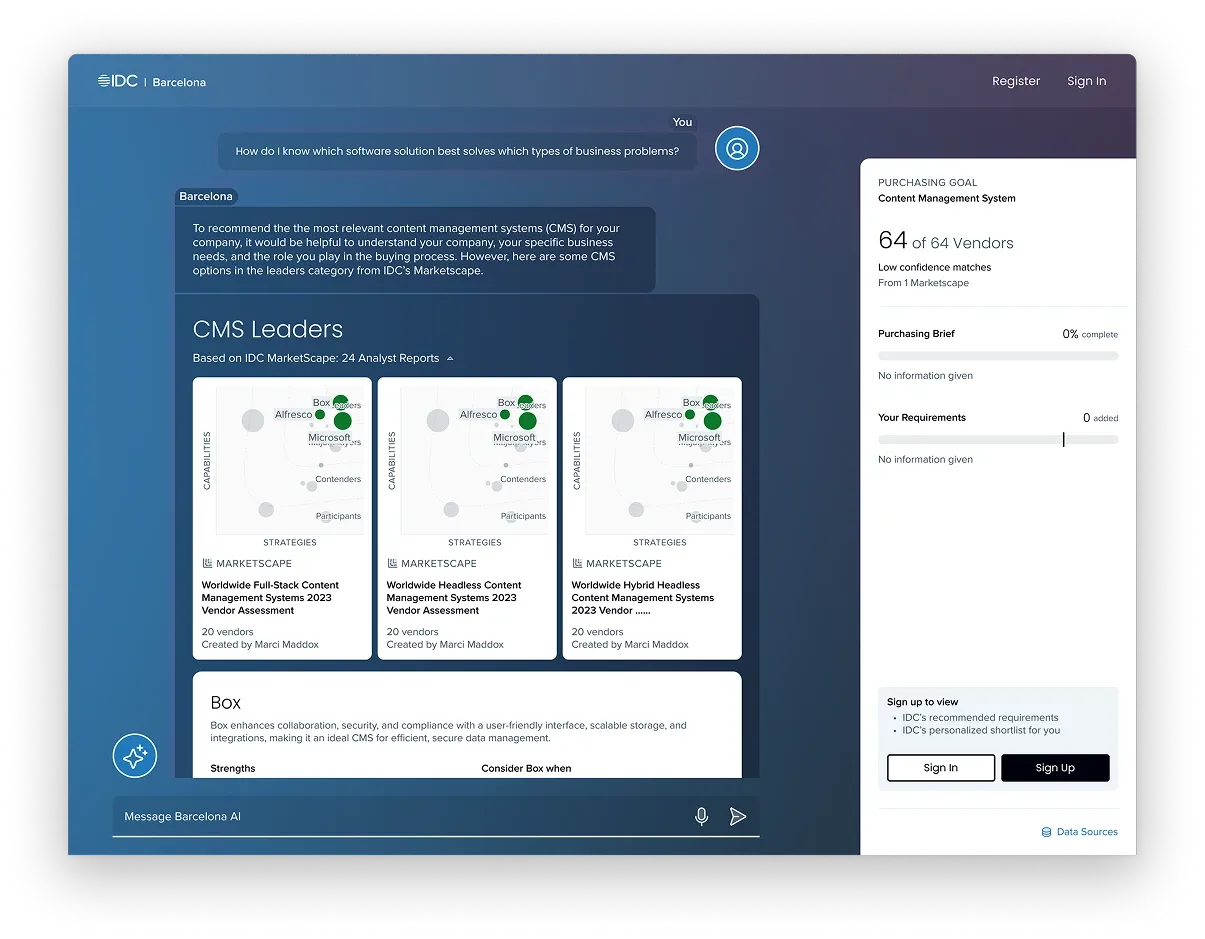
A concept workshop brought the full team together to generate directions against the reprioritized use cases. DesignMap turned the strongest ideas into tangible mockups and put them in front of customers and subject matter experts in structured value tests. Some concepts held up. Others were left behind. Each round narrowed the product toward what buyers said they would actually use.
Concept work from the Buyer engagement, 2024.
Then the tested concepts became a product engineering could build.
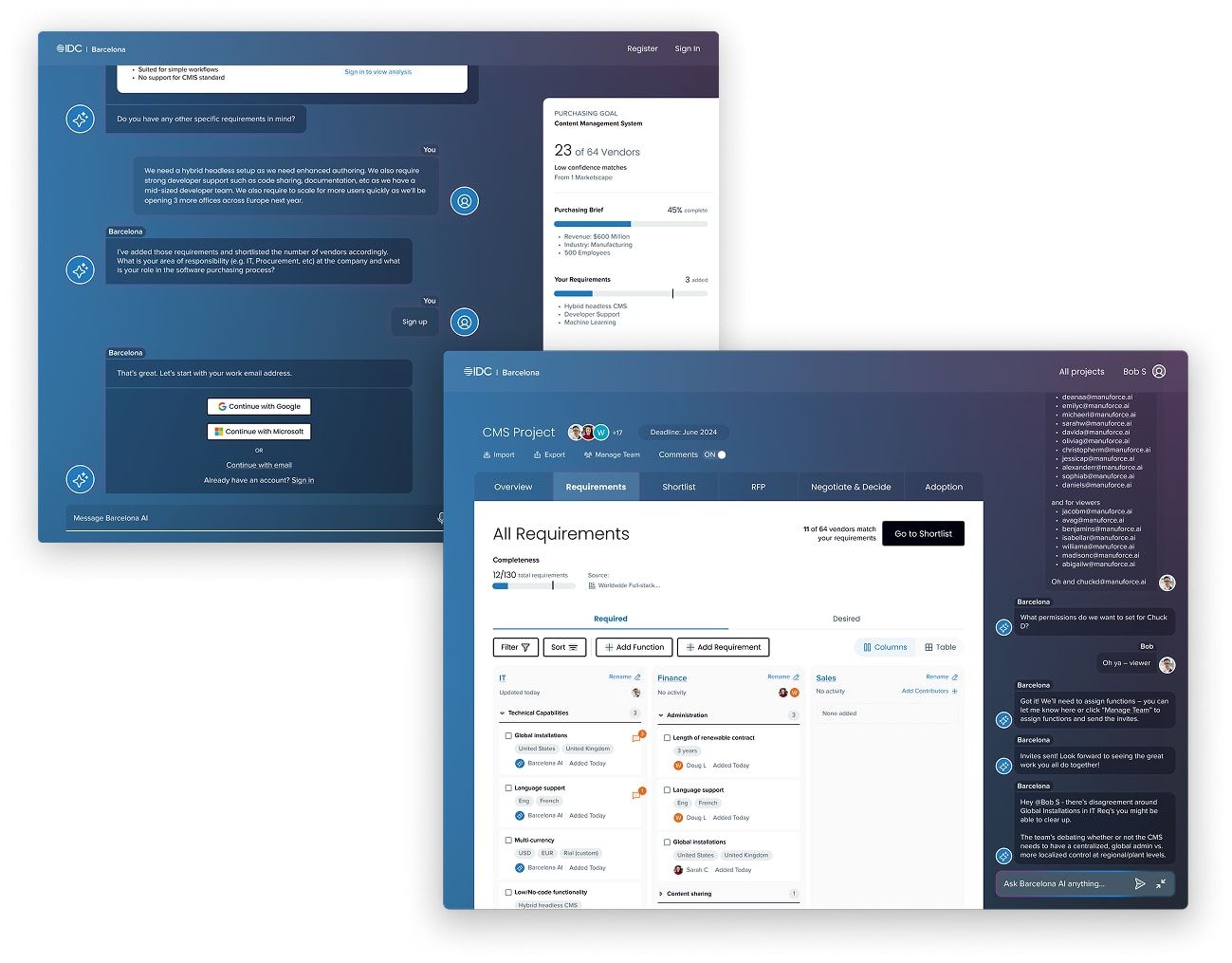
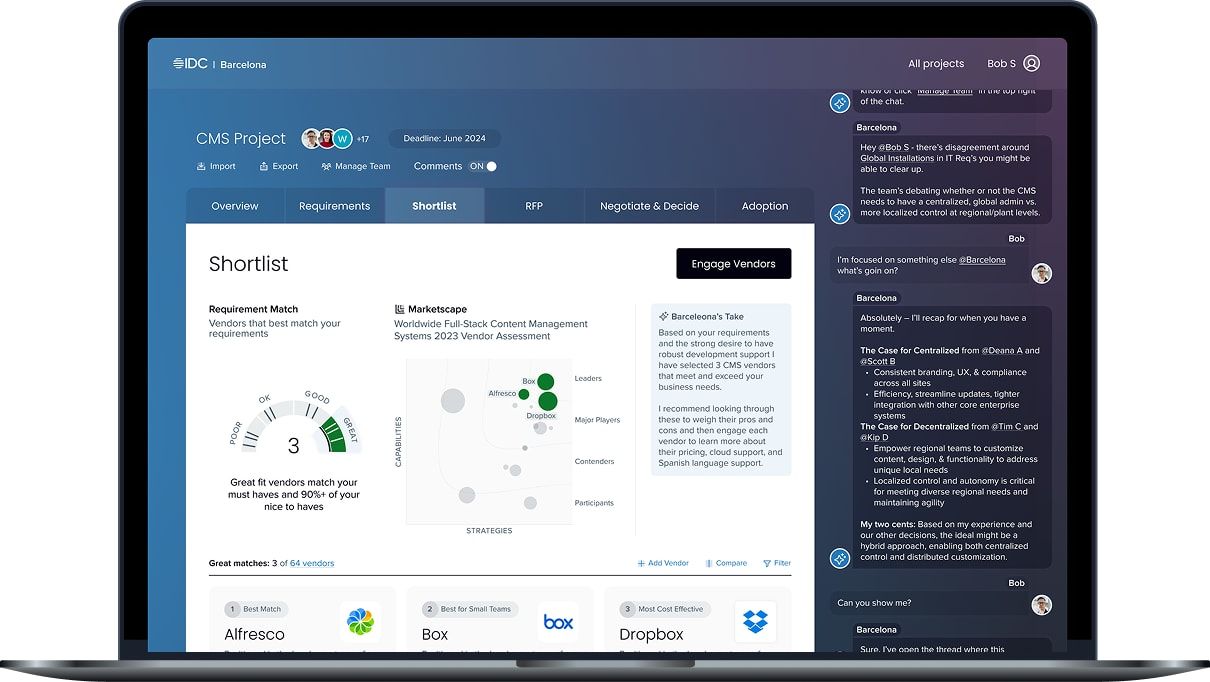
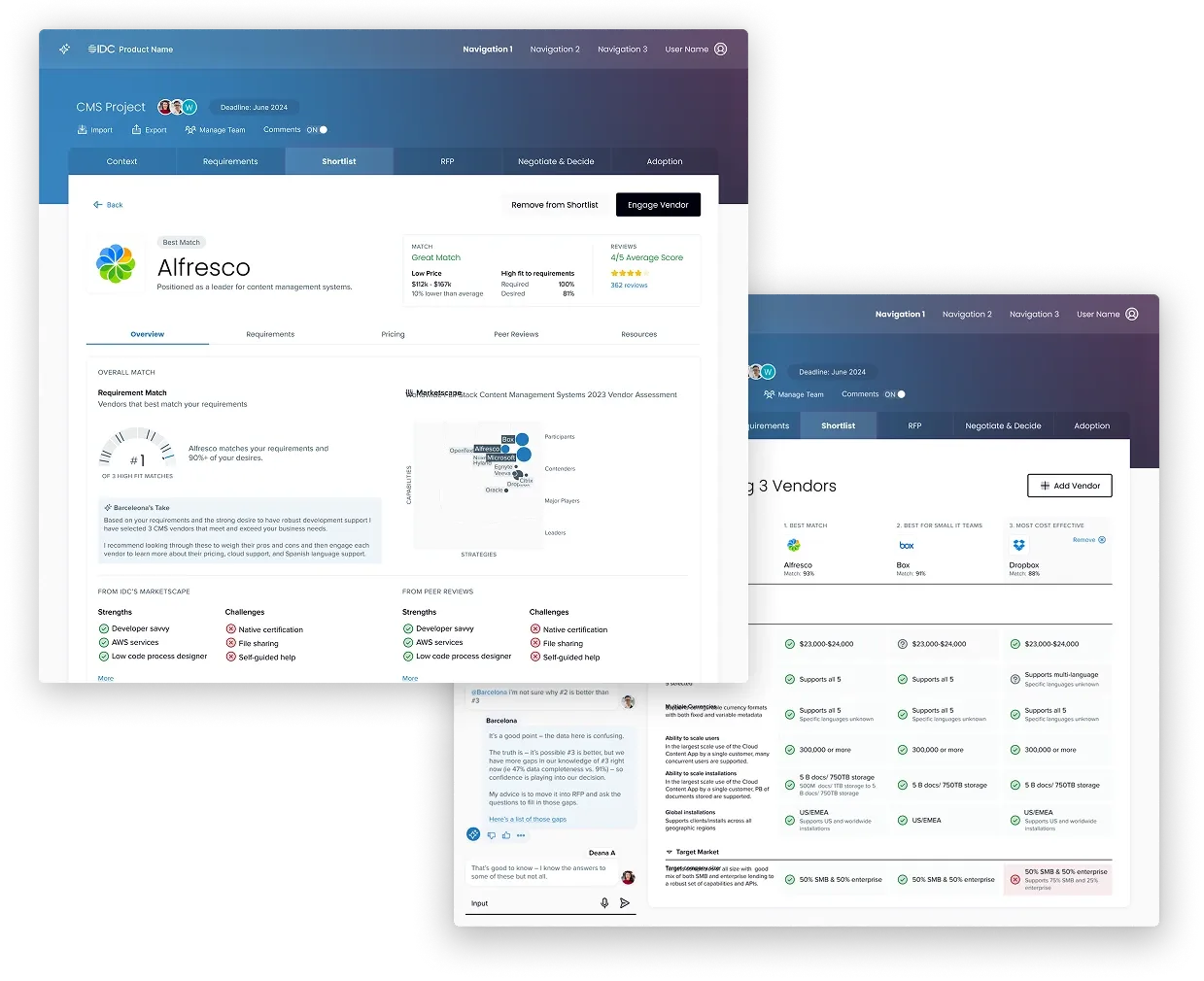
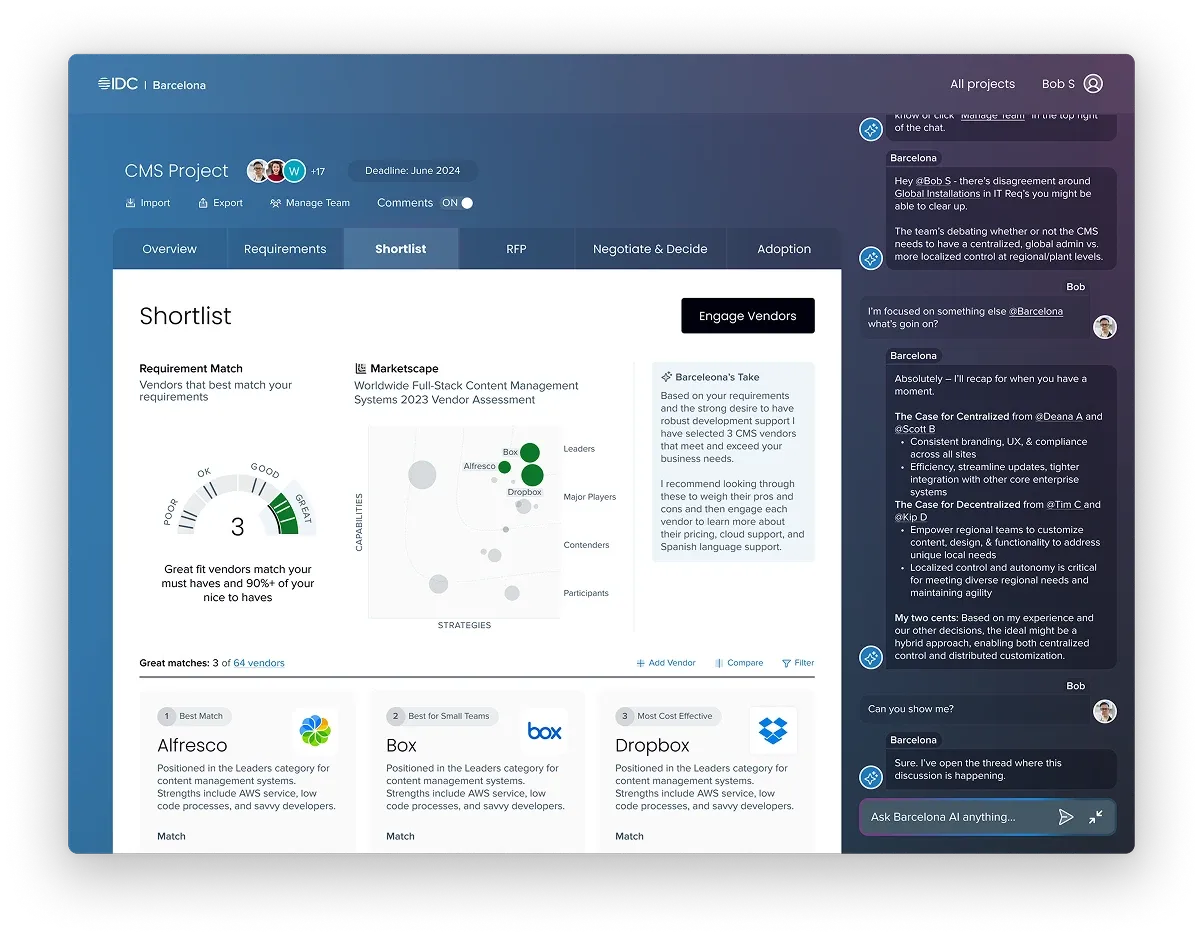
DesignMap designed the core workflows and key screens, explored visual directions grounded in IDC's existing patterns, and built high-fidelity designs into a clickable prototype that customers, experts, and stakeholders could react to directly. Iteration continued through testing, and the design was carried to production-ready alongside the engineering team.
Product design from the Buyer engagement, 2024.
From the working file: concept and testing material, 2024.
The product that came out the other side.
High-fidelity screens from the Buyer platform design.
Buyer platform product design, 2024.
IDC engaged DesignMap in January 2024 with a set of directional use cases. By that July, the Buyer platform was designed, tested with the buyers it was built for, and production-ready.