Product Direction

Seven years turning an email company into a marketing platform.

DesignMap worked with ExactTarget from 2009 to 2016, before and after its acquisition by Salesforce. The engagement ran from discovery research to product vision to shipped product, and produced Journey Builder, the tool that defined how marketers coordinate customer journeys across channels.
In 2009, ExactTarget was an email marketing company with a fresh $70 million round and a market shifting underneath it. Marketing was splintering across channels. Email still mattered, but social, SMS, display, and mobile messages now demanded the same coordination, and no tool treated them as one journey.

ExactTarget’s leadership decided to make the leap: from an email provider to a platform for all of it. The question they brought to us was what that platform should be.


Journey Builder started on a marketer’s corkboard.

Across the engagement we interviewed more than fifty marketers. One of them, at a national apparel retailer, showed us the corkboard she used to plan her campaigns: color-coded index cards branching into different paths at customer milestones. She was building journeys by hand because no software offered them. Looking at her board, we saw what had already convinced Scott McCorkle, the executive driving ExactTarget’s platform: marketers did not need more channels in one interface, they needed one surface above the channels, coordinating a single customer journey. That concept became Journey Builder.

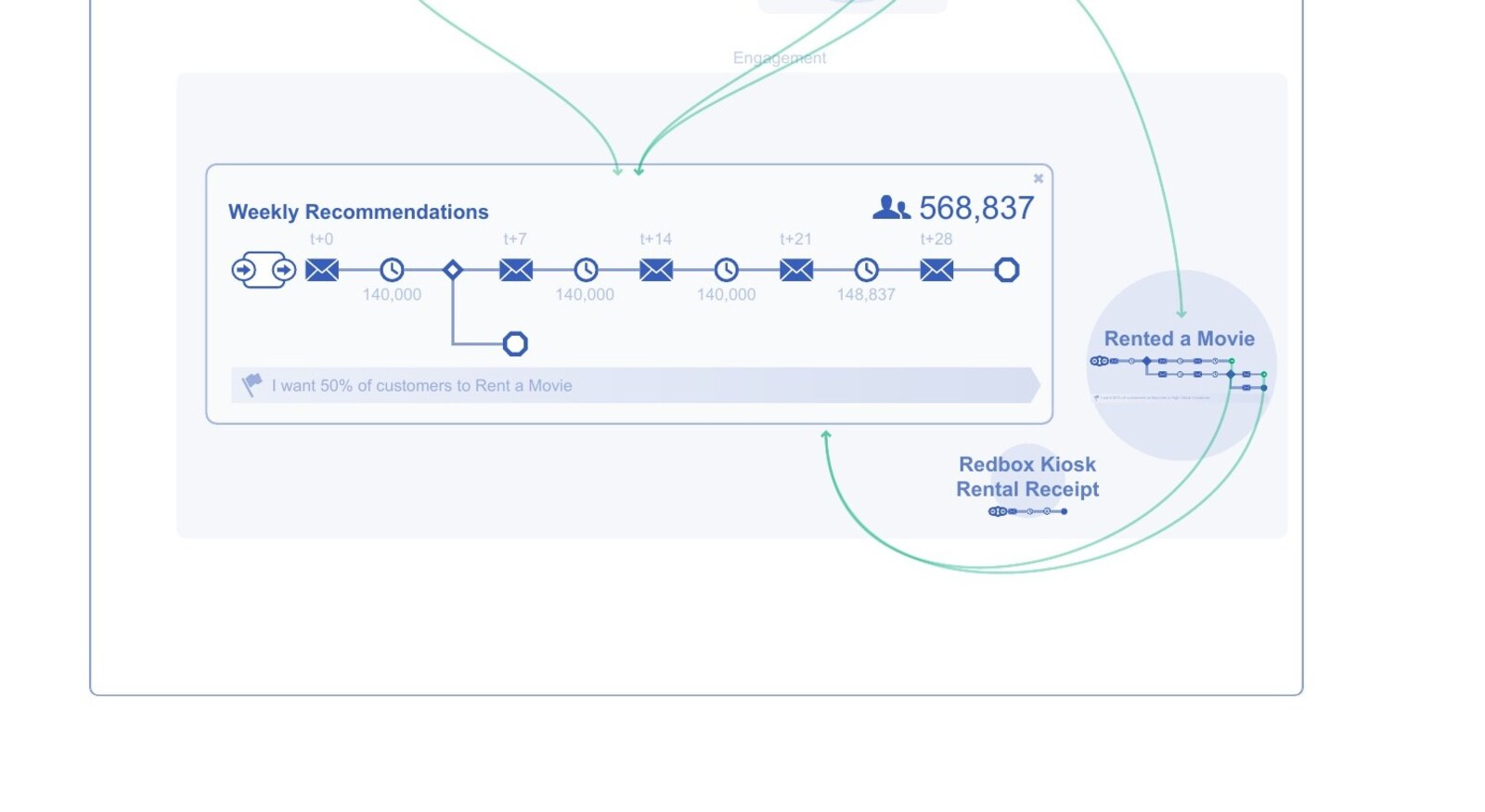
Concept design of a marketing journey: a Weekly Recommendations email sequence on a canvas, with audience counts at each step and a goal reading I want 50% of customers to Rent a Movie
Customer journey concept, May 2013. A journey with its goal line and population over time. The customer shown is a real ExactTarget client; the data is invented.

ExactTarget did not ship vaporware.

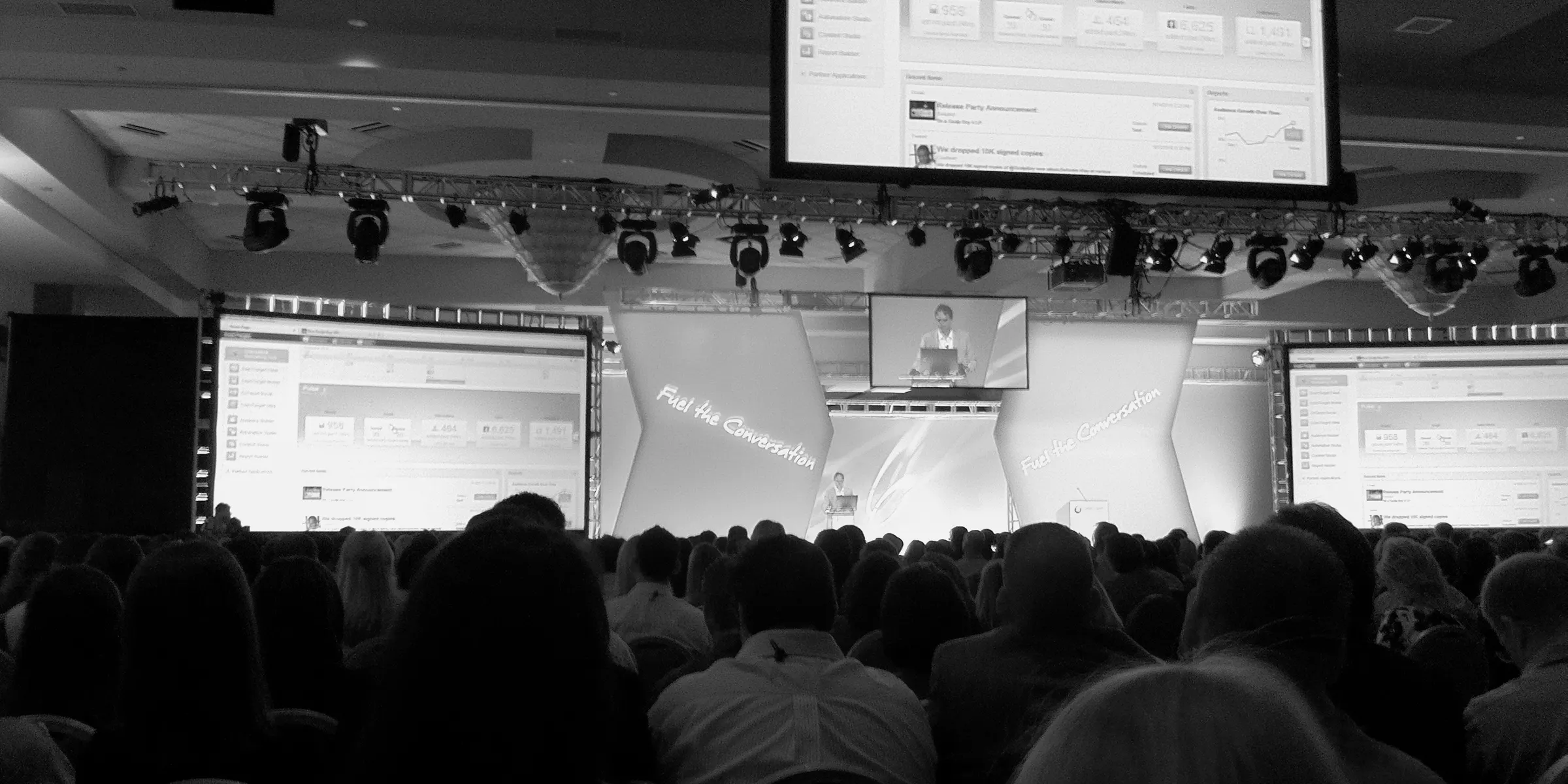
Product visions did their work inside the company. We built them at high fidelity, concrete enough that executives and product teams could see their customers in them, and over the years they aligned the organization around where the platform was going. What reached the stage at Connections was held to a different standard: built, or nearly built. When thousands of marketers saw the platform’s next chapter at the keynote, they were looking at product, not promises. That discipline came from ExactTarget’s leadership, and it is why the reactions in that room meant something.

The platform shipped in pieces, each one building on the last.

ExactTarget could not ship everything at once, and chose not to try. Releases were sequenced strategically, each one extending the system the last had put in place. Playbooks came early: pre-made journey templates built on the existing platform, real functionality that put the journey concept in marketers’ hands years before Journey Builder was complete. What marketers did with each release informed the next. A living design system held the pieces together as they accumulated into one coherent platform.

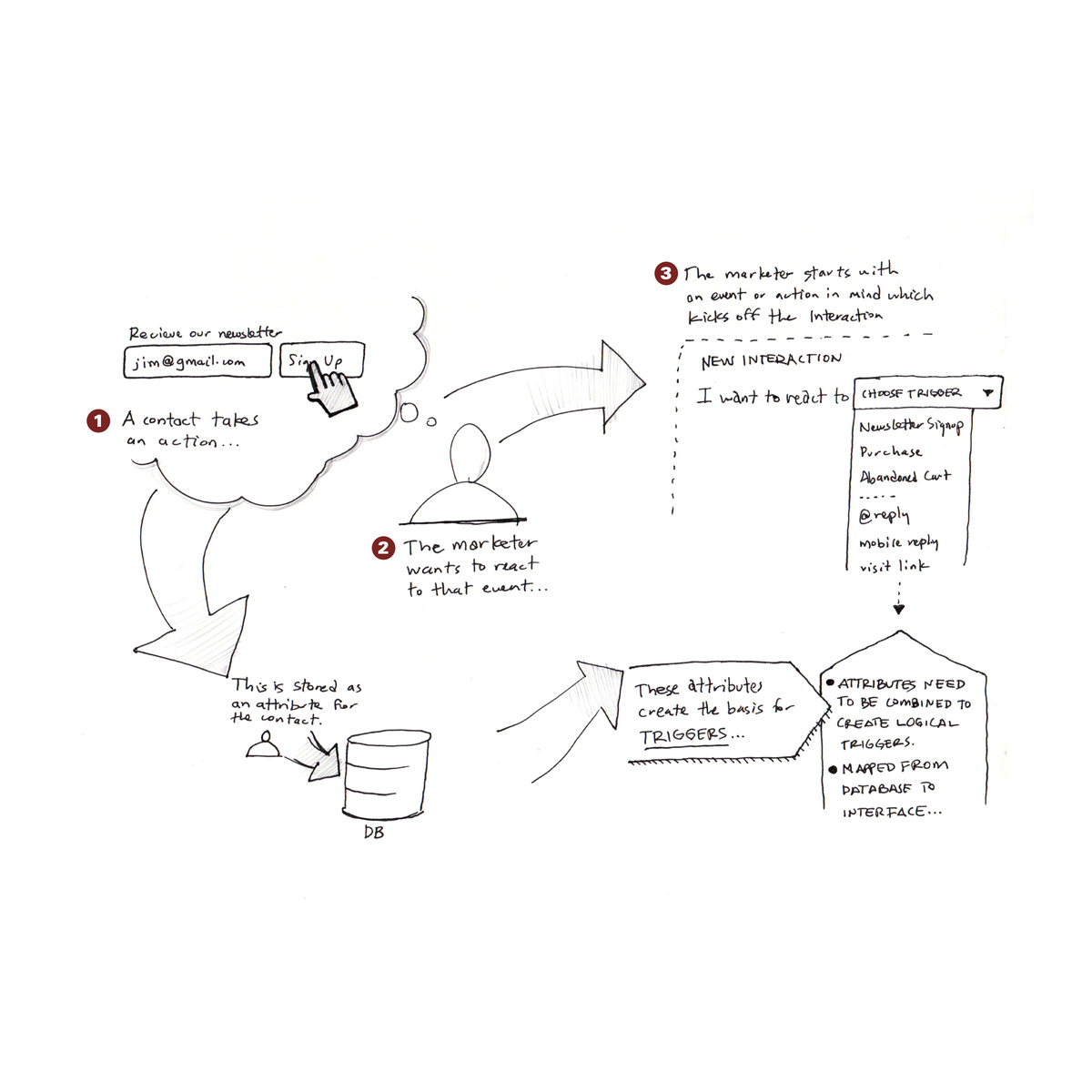
Concept sketch in three numbered beats: a contact takes an action, the marketer wants to react to that event, and the marketer starts from an event that kicks off the interaction. A New Interaction panel shows an open trigger dropdown, and a lower thread runs from action to stored attribute to database to logical trigger.
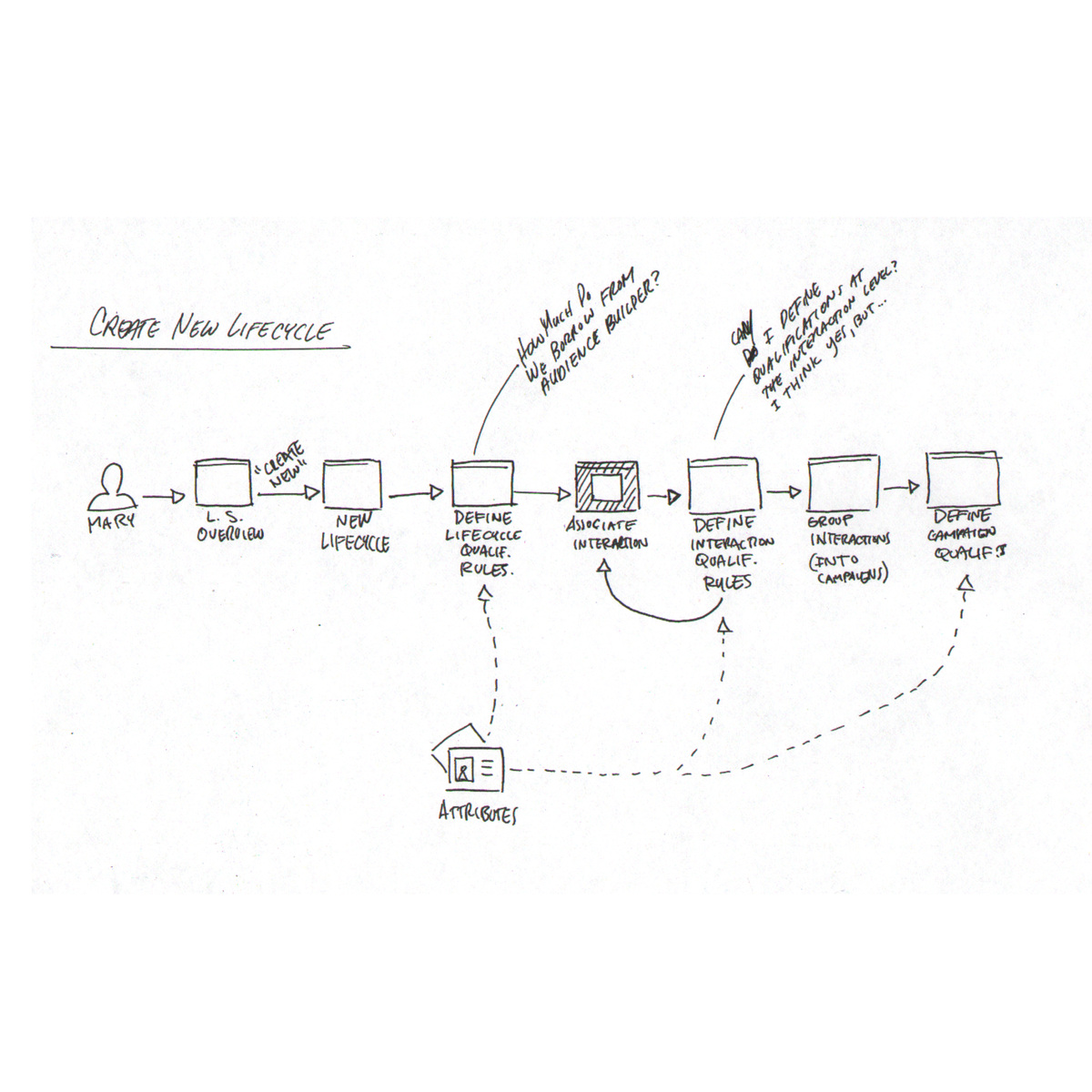
Hand-drawn task flow titled Create New Lifecycle. A persona moves left to right through overview, new lifecycle, define lifecycle qualification rules, associate interaction, define interaction qualification rules, group interactions into campaigns, and define campaign qualification. An attributes object feeds three of the steps by dashed line, with two handwritten questions in the top right margin.
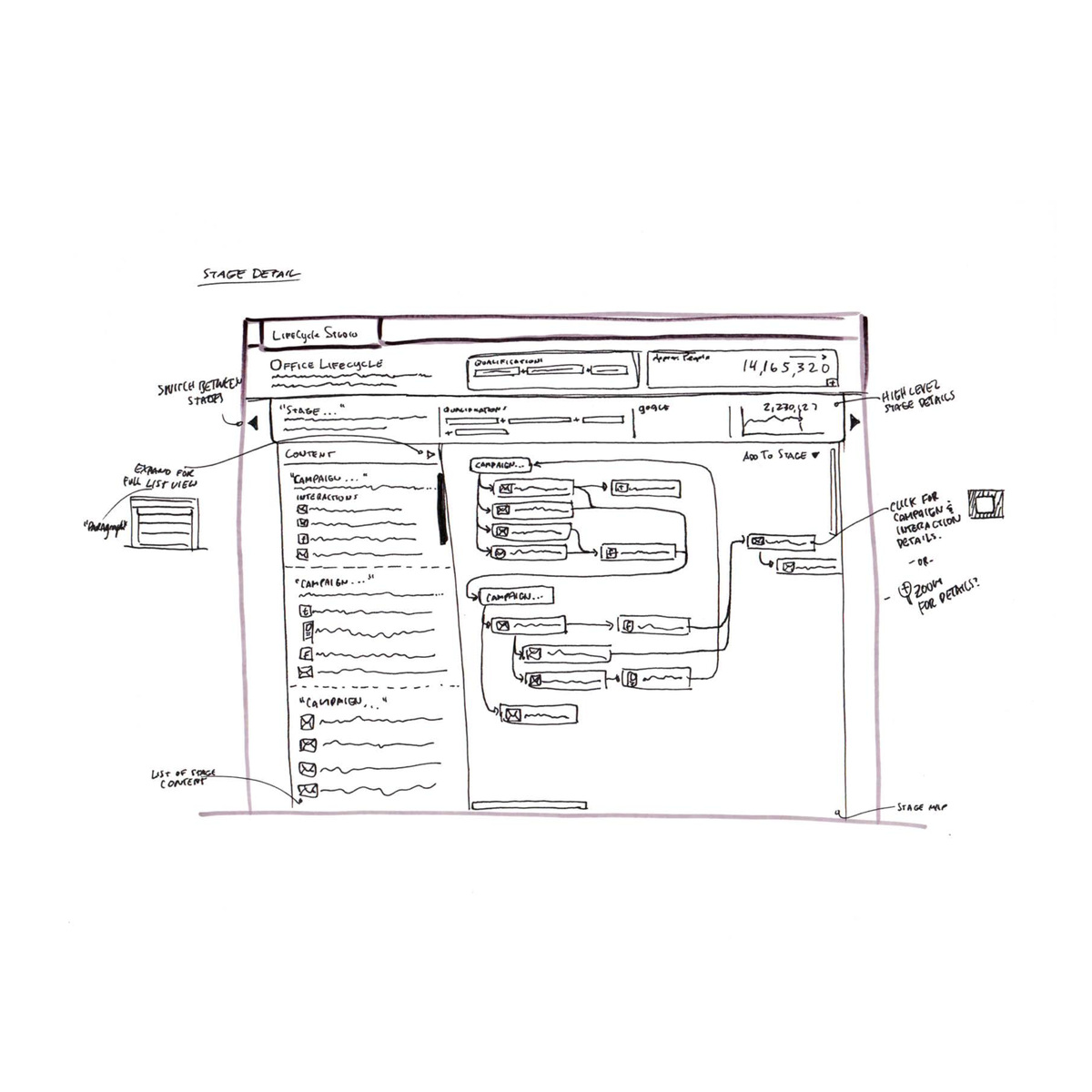
Interface wireframe titled Stage Detail: a lifecycle segment view with qualifications and an approximate-people figure, a stage row with goals, a content column of campaigns and interactions, and a node canvas, with margin annotations for switching between stages, expanding to full list view, and clicking or zooming for detail.
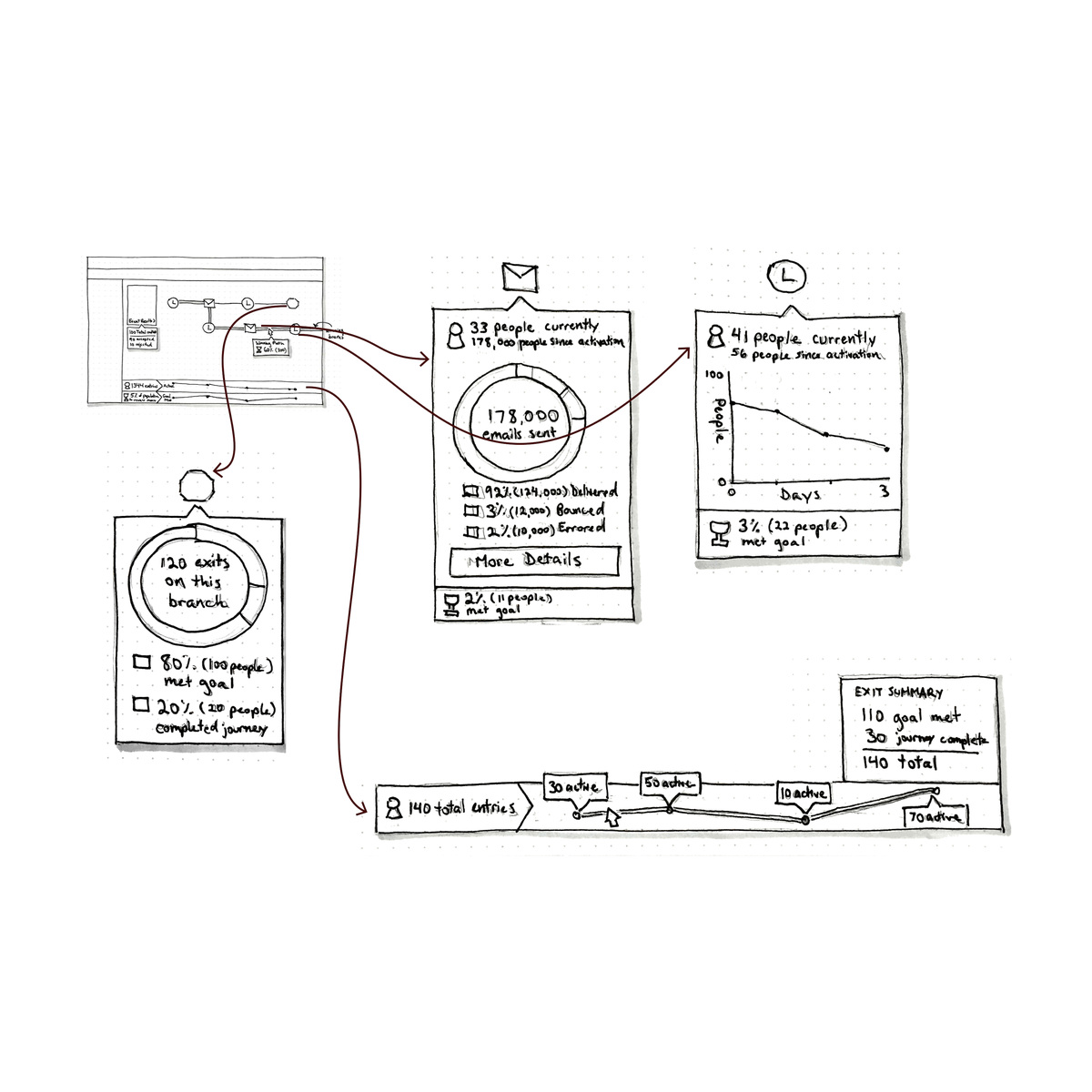
Journey Builder analytics annotation sheet on dotted grid paper. A canvas thumbnail feeds detail panels: an emails-sent donut with delivered, bounced, and errored breakdown, a people-over-days line graph, a branch-exit donut with goal-met and journey-complete splits, and an entry timeline with active counts and an exit summary tally.
Working material from the engagement. Interaction sketches, object models, and wireframes on the way from corkboard to Journey Builder.

Journey Builder as it shipped.

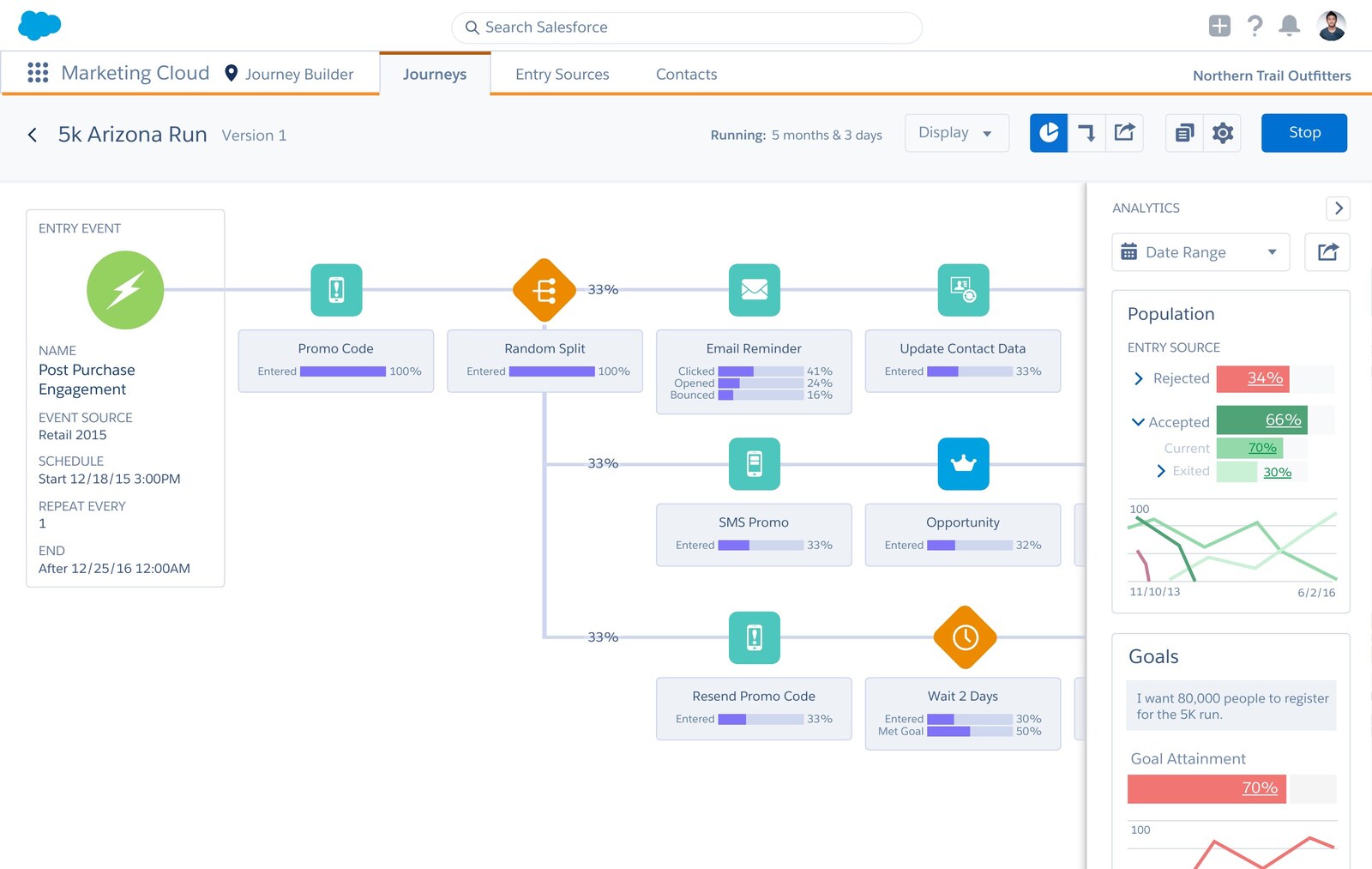
By 2016, the concept from the research was the platform’s centerpiece: one canvas coordinating email, mobile, and automation around a customer’s journey. This is the screen marketers worked in.

Journey Builder as shipped: a running journey with entry percentages at each step and an analytics panel showing population, entry sources, and goal attainment
Journey Builder in production, 2016, running in Salesforce Lightning.

Salesforce acquired ExactTarget for $2.5 billion in 2013. Journey Builder became the centerpiece of Marketing Cloud, and its journey model spread across the Salesforce platform. Scott McCorkle went on to lead Salesforce Marketing Cloud.


PreviousCisco Meraki
NextDocker
Where engagements begin

Strategic Alignment Session

Most engagements on this page begin here: your leaders in a room, reaching a decision they will act on. Sometimes it is all you need.

Talk to a partner